

Motorcycle hub motor integrate drive systems into a single unit, replacing traditional mechanical setups by tucking directly into a motorcycle’s wheel hub. They deliver torque straight to the road with fewer parts and less hassle, and today, they serve as the backbone of many electric motorcycles—from urban commuters to performance-focused models.
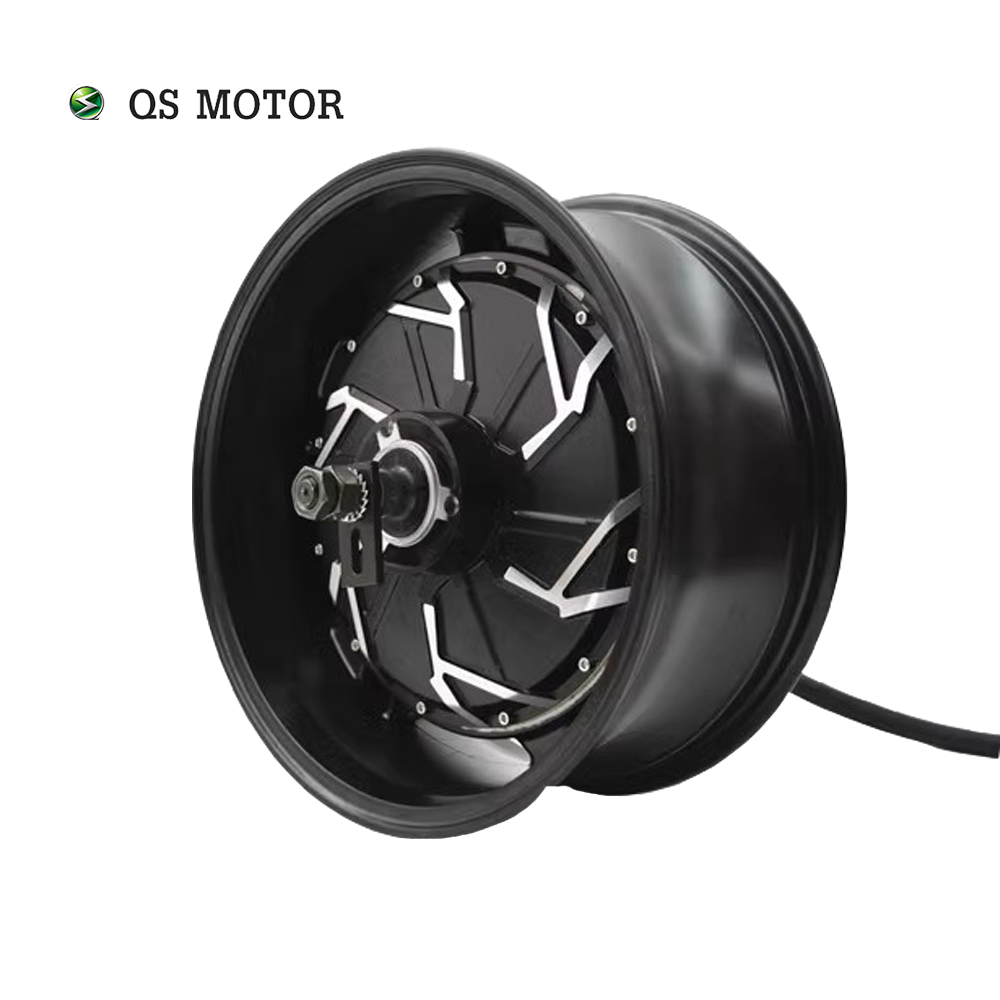
What Is a Motorcycle Hub Motor?
The motorcycle hub motor is a specialized electric motor designed exclusively for motorcycles that mounts directly into the hub of the bike’s front or rear wheel. Unlike mid drive motors (which sit on the frame and use chains/belts to spin the wheel), the hub motor acts as both the motor and the wheel’s central core. When electricity from the motorcycle’s battery flows to the motor, it spins the wheel directly—eliminating the need for gears, clutches, or transmission shafts.
Think of it as a “wheel with a built-in engine”, the motor’s rotating parts are fused to the wheel rim, so every bit of power goes straight into forward motion. For motorcycles, this design is particularly impactful because it streamlines the bike’s layout, cutting weight and complexity.
How Does It Work in a Motorcycle Context?
While motorcycle wheel hub motors rely on basic electromagnetism (like all electric motors), their design is optimized for the demands of motorcycles—higher speeds, heavier loads, and greater durability.
Core Components:
Stator: A fixed part attached to the motorcycle’s axle, lined with copper coils. When energized, these coils create a rotating magnetic field.
Rotor: A rotating ring fitted with strong permanent magnets (usually neodymium) that surrounds the stator. It’s bolted directly to the wheel rim.
Motion & Control: The stator’s magnetic field pulls and pushes the rotor’s magnets, spinning the rotor—and thus the wheel—at high speeds. A dedicated motor controller (calibrated for motorcycle performance) regulates power flow, adjusting speed and torque to match the rider’s input. Most motorcycle hub motors also include dual Hall sensors to track the rotor’s position, ensuring smooth acceleration even at high RPMs.
Braking: Many modern motorcycle hub motors integrate regenerative braking: when the rider eases off the throttle or applies the brakes, the motor reverses its role, acting as a generator to recharge the battery—extending range and reducing wear on mechanical brakes.
Why Electric Motorcycles Love Hub Motors
1. Simpler, More Reliable Than Gasoline Setups
Traditional gasoline motorcycles have hundreds of moving parts (gears, chains, clutches) that wear out, break, or need frequent maintenance. Hub motors have just a handful of components—no oil changes, chain adjustments, or clutch replacements required. This makes electric motorcycles with hub motors cheaper to maintain and more reliable for daily use.
2. Lightweight & Compact Layout
By eliminating the engine and transmission, hub motors free up space on the motorcycle frame. This lets manufacturers add larger batteries (extending range) or design sleeker, more aerodynamic bikes. For riders, the reduced weight (10–20% lighter than mid-drive electric motorcycles) makes the bike easier to handle—critical for navigating city traffic or tight corners.
3. Instant Torque for Thrilling Performance
Electric motors deliver 100% of their torque instantly—no revving required. Motorcycle hub motors amplify this by sending torque directly to the wheel, so riders get quick, smooth acceleration (0–60km/h in 3–5 seconds for mid-range models). This matches or beats many gasoline motorcycles of the same class, making hub-motor e-motorcycles fun to ride.
4. Quiet & Eco-Friendly
Unlike noisy gasoline engines, electric motorcycle hub motors operate almost silently—perfect for urban riders who want to avoid disturbing neighbors. They also produce zero emissions, aligning with global efforts to reduce carbon footprints.
5. Easy to Customize
For DIY builders or custom motorcycle shops, hub motors are a dream: swapping a stock wheel for a hub motor wheel is straightforward, with no major frame modifications needed. This makes it easy to convert old gasoline motorcycles to electric or build one-of-a-kind custom bikes.
Trade-Offs to Consider
Hub motors aren’t perfect for every motorcycle use case. Here are their main limitations:
Unsprung Weight: The motor adds weight to the wheel (called “unsprung weight”), which can reduce ride comfort on bumpy roads—though modern suspension systems often mitigate this.
Limited Off-Road Durability: While some models are waterproof (IP54–IP67), the exposed wheel hub is more vulnerable to damage from rocks or debris than a protected mid-drive motor.
Less Top Speed for Extreme Performance: For track-focused motorcycles needing 160km/h+ speeds, mid-drive motors with gearboxes still have an edge—hub motors can struggle with heat at sustained high RPMs.
Harder to Repair: If the motor fails, you often need to replace the entire wheel (not just the motor), which is more costly than fixing a mid-drive system.
Motorcycle hub motors have revolutionized two-wheeled electric mobility by combining simplicity, performance, and reliability. They eliminate the headaches of traditional gasoline setups while delivering the instant torque and quiet operation that make electric motorcycles appealing. For the future of clean, exciting two-wheeled transport, the electric motorcycle hub motor isn’t just a component—it’s the driving force.