

What Motor Is Used in an Electric Scooter? Electric scooters have become a staple of urban mobility, but behind their smooth, quiet rides lies a critical component: the motor. Unlike gas-powered scooters that rely on internal combustion engines, electric scooters use compact, efficient electric motors to turn the wheels.

But not all e-scooter motors are the same—their design, placement, and power vary based on the scooter’s purpose (commuting, off-roading, or heavy-duty use). So, what motor is used in an electric scooter? The answer depends on factors like performance needs, cost, and durability.
Key Terms to Understand E-Scooter Motors
Power Rating: Measured in watts (W), this tells you how much energy the motor can use. Most consumer e-scooters have motors between 250W (entry-level) and 2000W (high-performance/off-road). Higher watts mean more torque (for hills/loads) and faster speeds.
Voltage Compatibility: Motors pair with specific battery voltages (36V, 48V, or 72V). A 48V motor, for example, needs a 48V battery to operate safely—mismatched voltage causes overheating or failure.
Nearly all electric scooters use one of two motor designs: hub motors or mid-drive motors. Each has unique advantages, making them suited for different use cases.
Hub Motors: The Dominant Choice for Consumer E-Scooters
If you own a standard commuter e-scooter, it almost certainly uses a hub motor. As the name suggests, this motor is built directly into the hub of one of the scooter’s wheels—either the front or rear. It’s the most popular choice because it’s simple, affordable, and easy to install.
There’s no need for chains, belts, or gears, so power is transferred straight to the road with minimal energy loss.

Mid-Drive Motors: The Performance Choice for Specialized Scooters
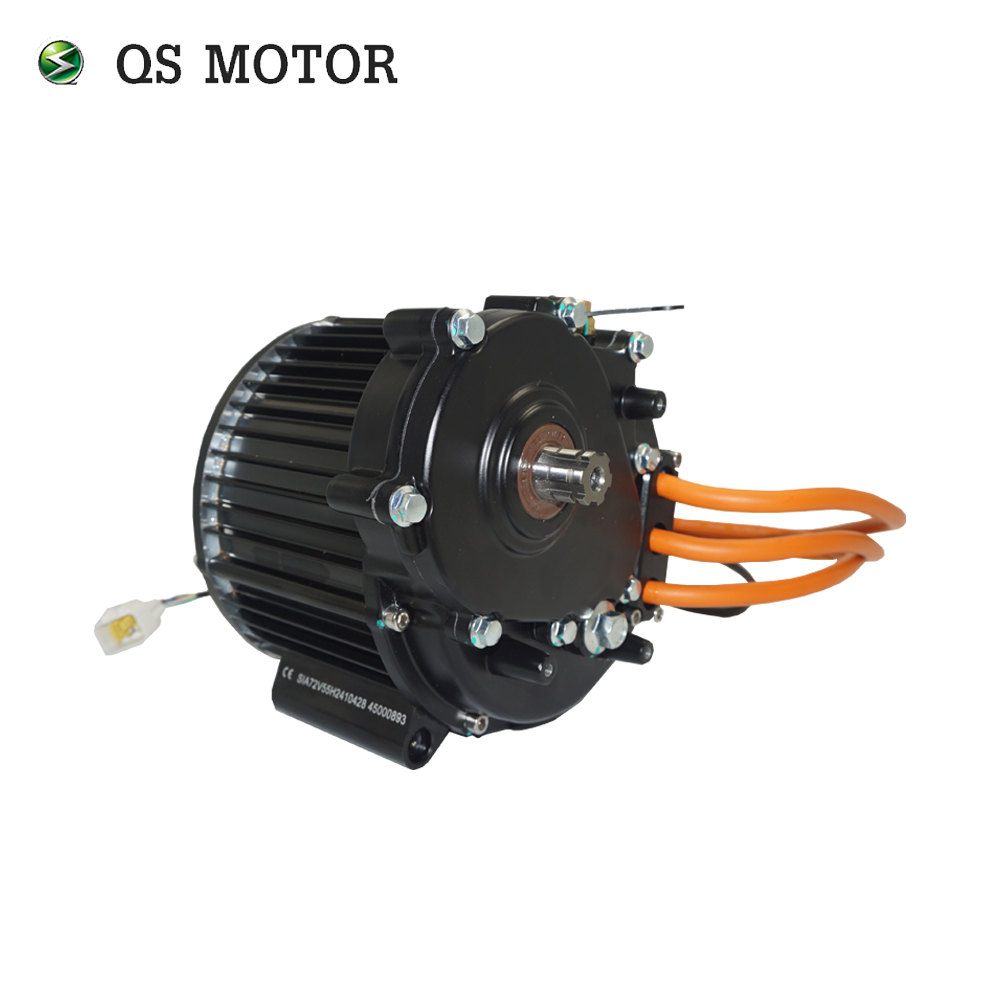
Mid-drive motors are less common in consumer e-scooters but dominate high-performance and off-road models. Unlike hub motors, they’re mounted on the scooter’s frame (near the bottom bracket, between the wheels) and connect to the rear wheel via a chain or belt.
Instead of spinning the wheel directly, mid-drive motors power the scooter’s drivetrain (the same system that moves a bike’s wheels when you pedal). The motor’s rotation is transferred to a chain/belt, which then turns the rear wheel.
This design lets mid-drive motors use the scooter’s existing gears (if it has them) to adjust torque and speed. For example, a low gear boosts torque for hills, while a high gear increases top speed on flat roads.
“Higher watts = better motor.” Not always. A 1000W gearless hub motor may struggle on hills, while a 500W geared hub motor handles them easily. Watts matter, but torque (and motor type) is more critical for real-world performance.
“Mid-drive motors are always better.” For casual commuters, a mid-drive’s extra cost and maintenance aren’t worth it. Hub motors are more than sufficient for 90% of e-scooter users.
So, what motor is used in an electric scooter? For most people, it’s a brushless rear hub motor—simple, reliable, and tailored to everyday commuting. For off-road or heavy-duty needs, a mid-drive motor steps in to deliver extra torque.
Understanding your e-scooter’s motor helps you maintain it better and choose a scooter that fits your lifestyle. Whether you’re zipping to work or exploring trails, the motor is the heart of your e-scooter—so knowing how it works ensures you get the most out of every ride.